
News
Vektor Medical Completes IMPRoVED-AF Enrollment and Appoints Brandon Allen as SVP of Sales
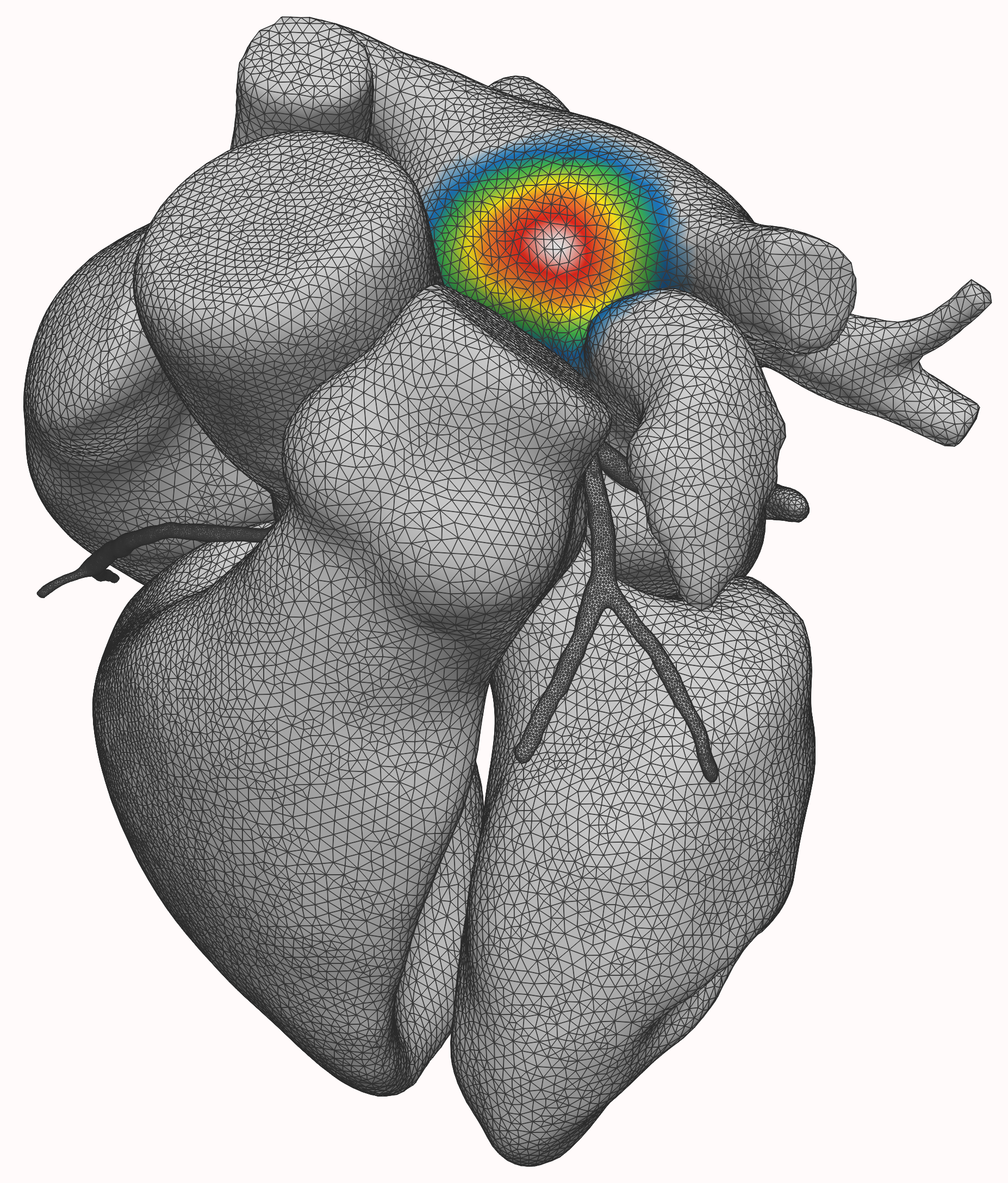
Vektor Medical has announced two significant milestones: the completion of patient enrollment in its IMPRoVED-AF randomized clinical study and the appointment of Brandon Allen as Senior Vice President of Sales.
The IMPRoVED-AF study enrolled 490 patients across clinical centers in the U.S. and Europe. The study is evaluating whether vMap-guided ablation of drivers beyond the pulmonary veins, alongside standard pulmonary vein isolation (PVI), can improve long-term outcomes for patients with persistent or recurrent atrial fibrillation. With enrollment complete, the study will progress through patient follow-up and data analysis.
Brandon Allen joins Vektor with more than 20 years of medical device sales and commercial leadership experience, most recently serving as Chief Commercial Officer at Atraverse Medical. He will lead Vektor's sales organization, focusing on expanding hospital adoption and driving utilization of vMap.
Together, these milestones reflect Vektor's continued progress in strengthening clinical evidence and accelerating the commercial adoption of vMap.


Vektor Medical Named a 2026 MedTech Innovator Mid-Stage Grand Prize Finalist
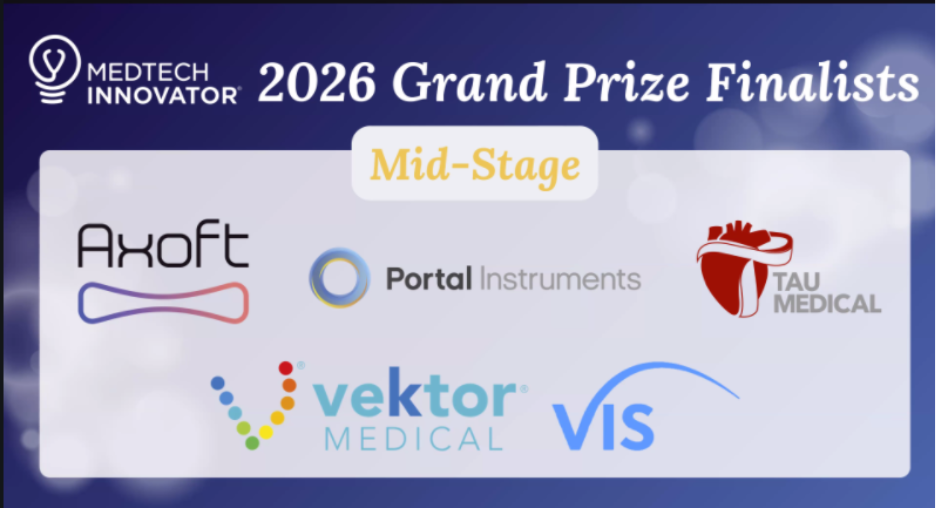
Vektor Medical has been named one of five finalists for the 2026 MedTech Innovator Mid-Stage Grand Prize, recognizing the company's progress in advancing innovative technology for the treatment of cardiac arrhythmias.
MedTech Innovator, the world's largest accelerator for medical technology startups, selected the five finalists based on their value propositions, achievements to date, and potential to transform patient care.
Vektor will join fellow finalists Axoft, Portal Instruments, Tau Medical, and VIS at the MedTech Strategist Innovation Summit in San Diego on November 4, 2026, where each company will present its technology to a panel of judges and compete for the $200,000 Mid-Stage Grand Prize. The winner will be selected through a live audience vote.
Vektor Medical Announces Approval of New Category I CPT Code for Non-Invasive Ventricular Arrhythmia Localization

Vektor Medical has reached an important reimbursement milestone with the approval of a new Category I CPT® code for non-invasive localization of ventricular arrhythmias using 12-lead ECG data.
Approved by the American Medical Association CPT Editorial Panel, the new code represents an important step in the progression of non-invasive arrhythmia localization from an emerging technology to an established medical service.
For Vektor, the milestone builds on growing clinical adoption of vMap, the only FDA-cleared, non-invasive technology that uses standard 12-lead ECG data to localize arrhythmia source locations across all four chambers of the heart.
Vektor previously supported the establishment of Category III CPT code 0897T, which became effective in July 2024. The move to a Category I code reflects continued advancement in clinical use, evidence generation and the reimbursement pathway for non-invasive ventricular arrhythmia localization.
The newly approved Category I CPT code is expected to become effective January 1, 2028. Coverage and payment will remain subject to individual payer policies and applicable reimbursement processes.
Vektor Medical Rhythm Theater at HRS '26

Saturday, April 25th 9.15-10am, Rhythm Theater 2
Transforming EP Workflows with Non-Invasive ECG Localization
Explore the growing clinical role of non-invasive ECG localization, designed with AI, in modern electrophysiology workflows via real-world clinical experience and emerging evidence. Join us to discover how actionable insights available both before and during procedures can support case planning, improve procedural efficiency, and guide more focused mapping and ablation strategies across a range of arrhythmias.
Visit Vektor’s Booths #1531 & #1532 for a demo and to meet the team.
New EP Europace Publication Demonstrates Improved Outcomes with vMap in Hemodynamically Unstable VT

Vektor Medical announced the publication of new peer-reviewed outcomes data in EP Europace, a leading electrophysiology journal, evaluating the use of vMap to support mapping and ablation in patients with hemodynamically unstable ventricular tachycardia (VT).
The investigator-initiated, two-center study showed 80% one-year arrhythmia-free survival (free from VT recurrence or death) in the vMap-guided cohort compared with 43% using conventional strategies. These improved outcomes were achieved without increases in procedure time, fluoroscopy exposure, or complication rates, despite a higher-risk baseline profile in the vMap group.
vMap enabled rapid non-invasive localization in under 30 seconds, supporting focused activation mapping with only brief VT inductions. Acute VT termination occurred in 37% of vMap-guided cases, compared with none in the control group.
This publication represents an important milestone, demonstrating meaningful long-term outcomes improvement in a highly complex VT population while maintaining procedural safety and efficiency.
Vektor Medical Highlights VITAL-EP Interim AF Results at AF Symposium 2026

Vektor Medical is showcasing early atrial fibrillation findings from the multicenter VITAL-EP registry this week at AF Symposium 2026 in Boston.
The featured presentation, “High Procedural Efficiency and Arrhythmia Non-Inducibility Using vMap for AF Ablation,” highlights real-world use of vMap to support fast, low-fluoroscopy PVI+ workflows across paroxysmal, persistent, and longstanding persistent AF.
Interim results demonstrate highly efficient procedures, frequent arrhythmia termination during ablation, high rates of post-ablation non-inducibility, and a strong safety profile - while maintaining a median fluoroscopy time of 0 minutes.
In addition, Vektor Medical will be showing its new atrial flutter workflow, expanding vMap’s non-invasive ECG-based analysis to support evaluation of both atrial fibrillation and atrial flutter using a single mapping platform.
Conference attendees can learn more about the VITAL-EP registry, the interim AF analysis, and the latest vMap capabilities by visiting Vektor Medical at Booth 208.
From Validation to Scale: Vektor Medical Closes 2025 with Strong Clinical Momentum and Global Progress

Vektor Medical ended 2025 with significant milestones reflecting growing adoption, expanding clinical evidence, and increased global reach for vMap.
More than 2,500 procedures have now been performed worldwide using vMap as adoption continues to expand across hospitals and health systems in the United States and Europe. Vektor also received a new FDA 510(k) clearance for the next-generation of its vMap system, adding capabilities including atrial flutter localization, enhanced connectivity, and advanced visualization tools.
The company advanced its evidence strategy through key enrollment milestones in the IMPRoVED-AF randomized study and the launch of the VITAL-EP registry, while also achieving CE Mark certification under EU MDR to support commercialization in Europe.
Together, these milestones reflect continued progress as Vektor scales its impact and advances the future of arrhythmia care.
Study Demonstrates vMap Localization for Hemodynamically Unstable VT
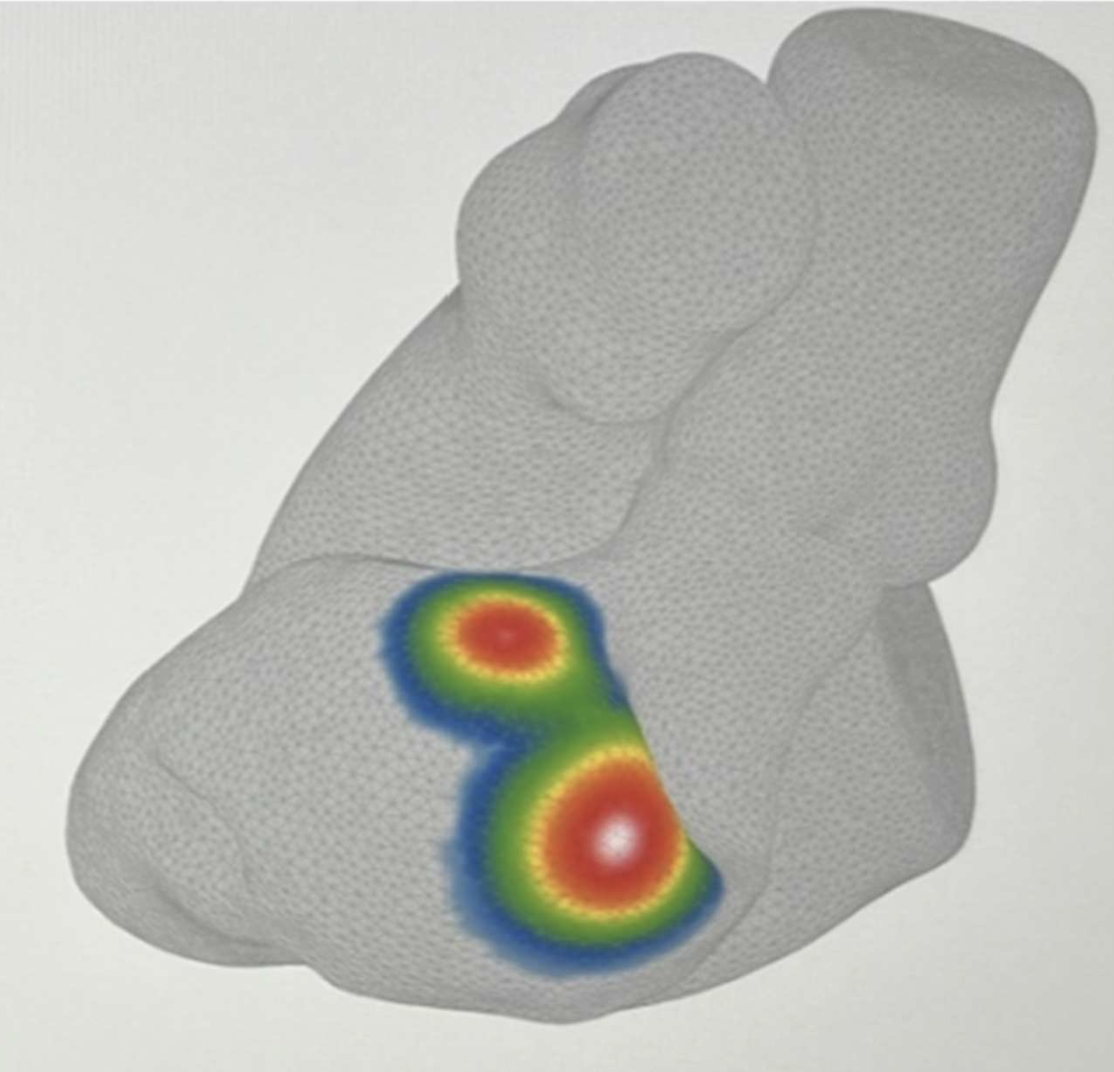
The Journal of Cardiovascular Electrophysiology today published a proof-of-concept study evaluating vMap’s approach to assisting localization of ventricular tachycardia (VT) exit sites in patients with hemodynamically unstable, scar-mediated VT.
The single-center study examined agreement between vMap analysis of standard 12-lead ECGs and substrate-based mapping performed in sinus rhythm, including pace-mapping and identification of channels of slow conduction within scar tissue - an approach that may be useful when activation mapping is limited by hemodynamic instability and scar complexity.
Across nine induced VT rhythms in four patients, vMap analysis showed agreement with the sites of successful ablation in cases where it was used. After ablation targeting those sites, the mapped VTs were not re-induced. At six months of follow-up, no patients experienced device therapy for recurrent VT or all-cause mortality.
Overall, the findings suggest that combining vMap analysis with established substrate-based mapping techniques may help support procedural planning in complex VT ablation cases. Further study in larger patient populations may help clarify clinical utility across a broader range of scar-mediated VT presentations.
Vektor Medical Receives FDA 510(k) Clearance for Next-Generation vMap, Adding Atrial Flutter Mapping and Enhanced Connectivity

Vektor Medical has received FDA 510(k) clearance for its next-generation vMap technology. The clearance expands vMap’s non-invasive mapping capabilities with several major enhancements, including atrial flutter mapping, direct ECG and data streaming to support interoperability with electrophysiology systems, software-only deployment as an FDA-cleared Software as a Medical Device (SaMD), and new 3D model import and visualization tools.
With this update, vMap’s clinical use now includes non-invasive localization of potential arrhythmia sources associated with atrial flutter mechanisms - broadening the range of arrhythmias that can be evaluated using a single, rapid mapping solution.
Vektor Medical Secures CE Mark for vMap, Enabling European Use

Vektor Medical announced that it received CE Mark for vMap, a non-invasive tool developed with AI that transforms standard 12-lead ECG data into 3D arrhythmia source maps in under a minute.
Previously available only in the United States, vMap has been used in more than 2,000 procedures across over 30 hospitals, helping physicians improve ablation outcomes and reduce procedure time. The CE Mark now enables hospitals and electrophysiologists in Europe to access the same data-driven insights for arrhythmia care.
Developed to complement existing lab technologies, vMap provides a rapid, non-invasive way to identify potential arrhythmia drivers and guide treatment. The technology integrates seamlessly into clinical workflows, offering physicians actionable insights before and during procedures.
Vektor achieved CE Mark certification through BSI, its Notified Body, under the EU Medical Device Regulation.
“Electrophysiology labs across Europe are in need of cost-effective ways to improve outcomes of ablation, especially in patients with more complex forms of atrial fibrillation,” said Dr. Lucas Boersma, electrophysiologist at St. Antonius Hospital Nieuwegein. “vMap is emerging as a simple, non-invasive way to gain critical insights upfront and during procedures, supporting more efficient workflows and informed decision-making.”
Vektor Medical Announces Patient Enrollment in VITAL-EP Study Evaluating vMap-Guided Ablations

Vektor Medical today announced that Ascension St. Vincent’s in Jacksonville, Florida has enrolled the first patient in the VITAL-EP study. The multi-center study will evaluate the procedural efficacy, acute success, and workflow optimization of ablation procedures guided by vMap®, the company’s FDA-cleared, non-invasive arrhythmia analysis technology.
“vMap provides a non-invasive view of arrhythmia drivers before and during procedures, helping us target ablation more effectively and improve efficiency,” said Dr. Saumil Oza, cardiac electrophysiologist at Ascension St. Vincent’s.
vMap Surpasses 2,000 Procedures, Marking a New Era in Arrhythmia Care

Vektor Medical announced today that vMap has been used in over 2,000 procedures across more than 20 U.S. hospitals - a milestone reflecting growing clinical demand for non-invasive, AI-driven arrhythmia mapping.
vMap localizes both focal and fibrillation-type arrhythmias using a standard 12-lead ECG, delivering actionable insights in under a minute. Clinical studies have shown it’s associated with reduced procedure time, offering potential improvements in safety and efficiency.
“vMap has become integral to how I treat patients,” said Dr. Anish Amin, Section Chief, Electrophysiology, OhioHealth. “It helps me identify arrhythmia sources quickly and confidently - supporting more effective, targeted ablation.”
As adoption of pulsed field ablation (PFA) grows, vMap is increasingly valued for helping identify ablation targets before and during procedures. The announcement comes as enrollment begins in the IMPRoVED-AF study, a randomized trial evaluating vMap in persistent and recurrent AF.
First Patients Enrolled in IMPRoVED-AF Study Evaluating vMap in Persistent and Recurrent AF

Vektor Medical today announced that the first patients have been enrolled in the IMPRoVED-AF clinical study. The prospective, randomized, controlled, multi-center trial is designed to evaluate the clinical benefit of using vMap®, the company’s FDA-cleared, non-invasive arrhythmia analysis technology, to guide ablation strategies beyond pulmonary vein isolation (PVI) in patients with persistent and recurrent atrial fibrillation (AF).
The first patients were enrolled at Baptist Health Lexington, a leader in cardiac care and innovation.
“Enrolling the first patient in the IMPRoVED-AF study marks an important milestone in our ongoing efforts at Baptist Health to further advance care for our patients suffering from cardiac arrhythmias,” said Dr. Gery Tomassoni, Principal Investigator and cardiac electrophysiologist at Baptist Health Lexington. “Using vMap to determine a targeted ablation strategy beyond the pulmonary veins provides an opportunity to address arrhythmia sources that were previously undetectable.”
The IMPRoVED-AF study will enroll up to 384 patients across approximately 20 centers in the U.S. and Europe. All patients receive a standard 12-lead ECG; those randomized to the intervention arm will receive additional driver ablation based on vMap’s analysis. The study's primary endpoint is freedom from AF at 12 months, with or without antiarrhythmic drugs.
Vektor Medical Initiates IMPRoVED AF Post-Market Clinical Study Evaluating the Impact of vMap in Ablating Non-Pulmonary Vein AF Drivers
Vektor Medical is excited to announce the launch of IMPRoVED AF, a prospective, randomized, controlled, multi-center clinical trial evaluating the benefits of AI-guided mapping in the treatment of persistent and recurrent atrial fibrillation (AF). The study will assess how vMap - Vektor’s FDA-cleared, non-invasive arrhythmia analysis platform - can enhance outcomes by identifying and targeting electrical drivers outside the pulmonary veins.
The study will enroll up to 384 patients across up-to 15 EP centers in the U.S. and Europe. All enrolled patients will undergo a standard 12-lead ECG. Those randomized to the intervention arm will receive additional targeted ablation based on vMap's analysis of non-pulmonary vein drivers.
The primary endpoint is freedom from AF at 12 months, with or without antiarrhythmic drugs.
Key secondary endpoints include:
- Freedom from AF and atrial tachycardia (AT) at 12 months
- Total procedure and vMap mapping time
- Change in AF burden post-ablation
- Rate of spontaneous AF termination during ablation
- Total fluoroscopy exposure
Vektor Medical Rhythm Theater at HRS '25

Saturday, April 26th 9.15-10am, Rhythm Theater 2
AI and PFA: A Complementary Approach to Arrhythmia Treatment
Explore how vMap’s technology is redefining arrhythmia localization and treatment options. Our expert panel will highlight the impact of vMap ECG analysis on clinical workflows, accuracy in ablation procedures, and patient outcomes. Gain insights into the latest advancements, upcoming studies, and the growing role of AI in shaping the future of electrophysiology.
Visit Vektor’s Booths #1622 & #1523 (side-by-side) for a demo and to meet the team.
Vektor Medical Expands Leadership to Drive Growth & Market Reach

Vektor Medical has announced key leadership appointments to support commercial expansion and market entry initiatives. Michael Andersen joins as Vice President of Sales, while Mihir Naik has been promoted to Vice President of Quality Assurance and Regulatory Affairs. These strategic moves position Vektor for rapid growth following its oversubscribed $25M Series A funding round.
In addition, CEO Robert J. Krummen will present a corporate update at LSI USA '25 in Dana Point, CA, on March 19 at 1:45PM PST. His presentation will cover Vektor’s strengthened leadership, commercial momentum, and innovation-driven strategy, fueled by the $25M Series A round led by TVM Capital Life Science and Solas BioVentures.
Vektor Medical 2024 Year In Review
2024 was a year of growth, innovation, and impact for Vektor Medical. From expanded vMap adoption across arrhythmia types to groundbreaking clinical data and a significant reimbursement milestone, we’ve made significant strides in transforming arrhythmia care.
Vektor Medical’s AI-Powered vMap Achieves 91% Accuracy in VT Localization

New data to be presented at the 2024 American Heart Association Scientific Sessions highlights vMap’s 91.1% accuracy in distinguishing epicardial vs. endocardial ventricular tachycardia (VT) - far surpassing visual ECG analysis (62.5%).
Presentation: November 17, 11:30 AM | AHA Scientific Sessions, Chicago
Vektor Medical Presents AI-Powered Research at HRX 2024

Vektor's Chief Technology Officer, Chris Villongco, will present two studies at HRX 2024, showcasing the innovative use of AI in analyzing wall thickness and scar tissue in ventricular tachycardia patients. These studies, selected for the Top 5 AbstracX session, demonstrate Vektor’s cutting-edge approach to improving VT treatment.
The first study highlights the integration of vMap’s AI-driven ECG analysis with CT data for precise localization of VT sources, optimizing ablation procedures. The second study validates the accuracy of Vektor’s AI models in analyzing myocardial wall thickness, further enhancing VT care.
Vektor Medical Rhythm Theater at HRS '24

Friday, May 17th from 4–5pm, Rhythm Theater 2
The Future of Care: Leveraging AI for ArrhythmiaLocalization
Join us for an in-depth discussion on the future of AI-driven ablation and discover how vMap seamlessly integrates into existing workflows, elevating patient care and driving more efficient procedures.
Visit Vektor's Booth #669 for a demo.
vMap Study Results Published In The Journal of Cardiovascular Electrophysiology

A recent publication in the Journal of Cardiovascular Electrophysiology (JACE) highlights the efficacy of vMap in optimizing the treatment process for patients with cardiac arrhythmias undergoing ablation therapy.
The “Impact Of Artificial Intelligence Arrhythmia Mapping on Time to First Ablation, Procedure Duration, and Fluoroscopy Use,” is a retrospective, case-controlled study of 28 patients with common arrhythmia types. Designed to evaluate the impact of AI ECG mapping on time to ablation, procedural duration, and fluoroscopy, key data points from the study demonstrate vMap’s ability to deliver:
- 19.0% reduction in time to ablation (133 ± 48 vs. 165 ± 49 min, p = 0.02)
- 22.6% reduction in procedure duration (233 ± 51 vs. 301 ± 83 min, p < 0.001)
- 43.7% reduction in fluoroscopy (18.7 ± 13.3 vs. 33.2 ± 18.0 min, p < 0.001)
Additionally, at six-month follow-up, arrhythmia-free survival was evident in 73.5% of the study group compared to 63.3% of the control group (p = 0.56).